


January 14, 2026
The One Shift That Changes Everything
What if your students only had to understand 3 math main ideas instead of memorizing 15 problem types?
Cognitively Guided Instruction (CGI) has been around for many years, and I love its foundation: teaching that follows a child’s mathematical thinking rather than forcing every child to solve problems the same way. (Heinemann, 2025) It’s built on critical thinking and curiosity, which makes it highly effective.
But there’s one key way it falls short.
This might seem like a small distinction, but I think it actually highlights a huge gap.
- CGI problem types are named based on the action.
- SoE structures are named based on the relationship.
Let’s look at the difference.
CGI vs SoE
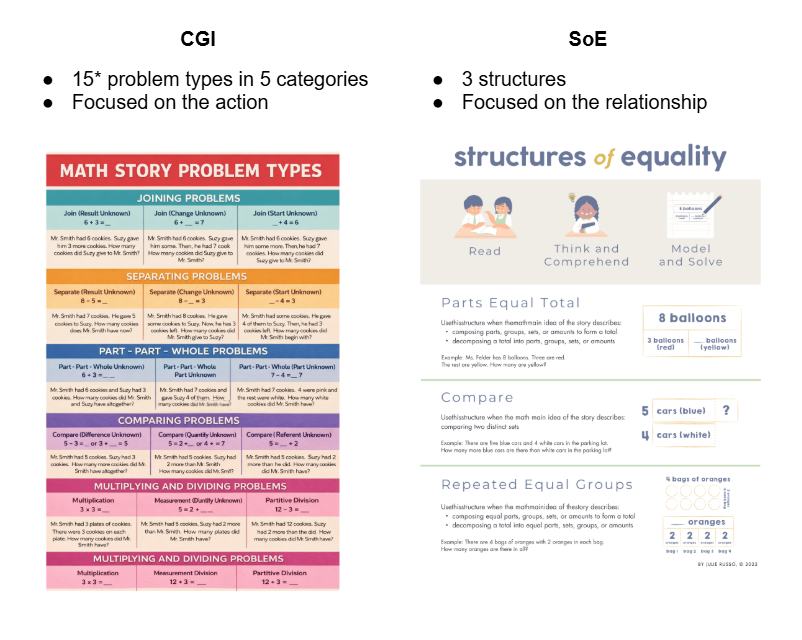
Look at the names of those CGI problem types. They’re based on the action, the operation students use to solve. This means students still fall into the trap of thinking in terms of procedures rather than sense-making.
In SoE, the focus is on how to describe the relationship occurring in the story. Based on that relationship, students then choose the structure that accurately models what’s happening. The outcome? Students truly understand the story. Only then do they solve.
You Don’t Have to Choose Between CGI and SoE
You don’t need to abandon the high-quality problems you’re already using with CGI. Instead, you can bridge the gap by helping students focus on the relationship in those same problems.
The easiest way to do this? Use the Math Main Idea Sorting Mat.
How It Works
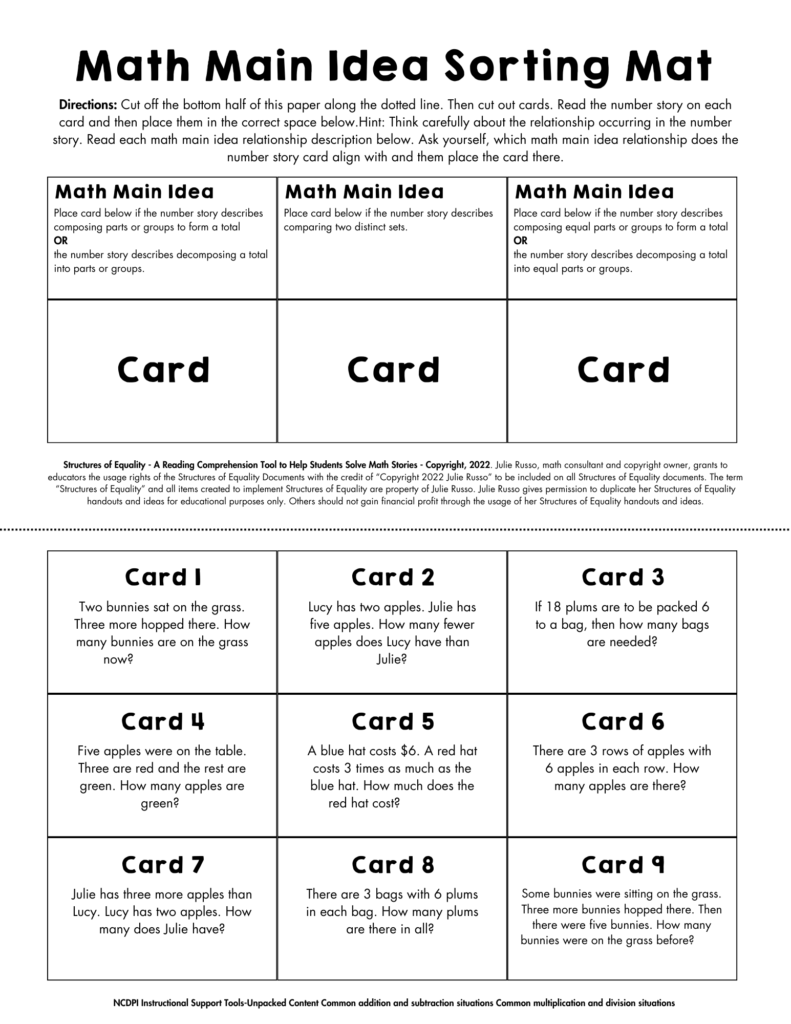
The sorting mat helps students identify which of the three math main ideas (relationships) is happening in a story:
- Composing parts to form a total OR decomposing a total into parts
- Comparing two distinct sets
- Composing equal parts to form a total OR decomposing a total into equal parts
Instead of students jumping straight to “What operation do I use?”, they pause and think: What relationship is this story describing?
You can use the problems that come with the mat, or use the fillable version to add your own CGI problems. This lets you keep using the high-quality stories you already have while shifting the focus from action to relationship.
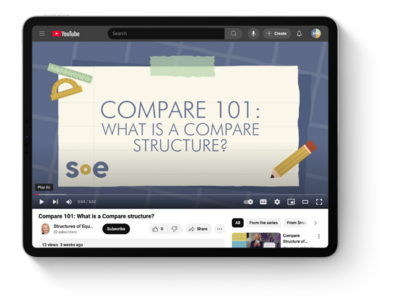
Watch this 4-minute video to see exactly how to use the sorting mat with your students.
Start Small
You don’t need to overhaul everything you’re doing. Start by using the sorting mat once a week during your math block. Let students practice identifying the math main idea before they solve.
Here’s what you’ll start to notice. Students will slow down. They’ll read more carefully. They’ll stop guessing at operations and start making sense of what’s actually happening in the story.
That’s the shift, and it doesn’t require you to throw out what’s working.
All you have to do is take what you already love about CGI and layer in the comprehension piece that’s been missing. Your students will thank you for it.
