



January 21, 2026
A simple way to support understanding at home
If your child struggles with math word problems, you’re definitely not alone. Many kids can add, subtract, multiply, or divide just fine, but things fall apart as soon as they’re faced with a word problem.
That’s why I like to see them for what they really are: math stories.
Just like a story in a book, math stories have characters, actions, and settings. And just like in reading, kids need to understand the story before they can answer questions about it. If they don’t, they start guessing, copying a method they remember, or freezing up.
That’s where focusing on the math main idea can help.
What Is the Math Main Idea?
In reading, the main idea tells what a story is mostly about.
In math, the math main idea tells us what’s happening with the numbers. It describes the relationship in the story: the way the amounts are changing, being compared, or grouped.
Here’s the good news: no matter what grade your child is in, every word problem in K–5 math can be described by one of just three math main ideas.
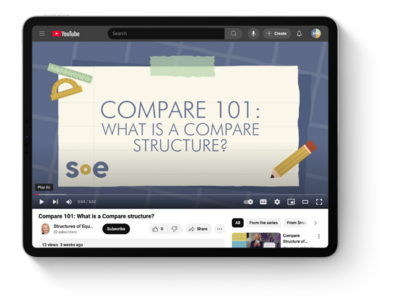
📹 Want a deeper explanation of what the math main idea is and how it helps students? Watch this short video where I walk through it clearly with examples.
The 3 Math Main Ideas (With Examples)
1. Composing or Decomposing Parts and Totals
This is when amounts are combined to make a total, or a total is broken down into smaller parts.
- Compose – put together
- Decompose – take apart or break down
Example:
For lunch, Mia packed 3 apples and 2 oranges. How many pieces of fruit did she bring?
→ This story describes composing parts to find a total.
Or:
Mia brought 5 pieces of fruit. If 3 were apples, how many were oranges?
→ This one describes decomposing a total into parts.
2. Comparing Two Sets
This is when the story describes how two amounts are related: who has more, less, or how much more/less.
Example:
Liam has 12 toy cars. Ella has 7 toy cars. How many more does Liam have than Ella?
→ This story describes comparing two distinct sets.
Comparisons can also give the difference and one amount, asking your child to find the other.
3. Composing or Decomposing Equal Groups
This is when the story involves groups with the same amount in each. We’re either composing those equal groups to form a total, or decomposing a total to find how many are in each group, or how many groups there are.
Example:
There are 4 bags. Each bag has 6 marbles. How many marbles are there?
→ This story describes composing equal groups to find a total.
Or:
There are 24 marbles. If there are 6 in each bag, how many bags are there?
→ This story describes decomposing a total into equal groups.
How to Tell If Comprehension Is the Problem
Your child might:
- Solve quickly without being able to explain their thinking
- Say “I don’t get it” as soon as they see a word problem
- Guess the operation based on what they did yesterday
- Copy a method without understanding why
These are signs they don’t understand the story, and comprehension is the missing piece.
How You Can Help at Home
You don’t need special materials. Just slow things down and talk through the story together before solving.
1. Read the Problem Like a Story
Ask:
- Who’s in the story?
- Where is it happening?
- What are they doing?
- What’s the thing we’re counting?
You can even cover up the question at the end at first. Focus on understanding the situation.
2. Ask About the Math Main Idea
Then guide your child to the relationship behind the numbers.
Try these prompts:
- Are we putting things together or breaking something apart?
- Are we comparing two amounts?
- Are we talking about groups that all have the same amount?
Encourage your child to describe it in their own words. For example:
- “We’re putting the apples and oranges together.”
- “We’re seeing how many more Liam has.”
- “We’re adding up how many marbles in all the bags.”
3. Use Math Vocabulary (and Explain It Simply)
Here are a few terms that may come up:
- Total: the whole amount
- Parts: smaller pieces that make up the total
- Compose: put parts together to make a total
- Decompose: break a total into smaller parts
- Compare: look at how two amounts are different
- Equal groups: groups with the same number in each
It’s okay if your child doesn’t use these terms yet. Just helping them explain what’s happening is enough.
Why It Matters
Focusing on the math main idea helps your child stop guessing and start thinking. It builds understanding, not just answers. And it reduces frustration, because when kids understand the story, the math makes more sense.
Remember: the goal isn’t speed. It’s comprehension. Even just one well-understood problem is more valuable than ten rushed ones.
So next time a word problem causes stress, pause. Talk through the story, find the relationship, and help your child build the confidence to make sense of math.
Once your child understands the math main idea, you’ll still need to guide them through solving. Here’s exactly what to say and ask to help them work through any math problem with confidence.
