



November 4, 2026
Have you ever picked up a student’s test and found a circled letter with nothing else on the page? There’s nothing to show any sign of what they were thinking.
We ask students to show their work and sometimes to write equations for word problems, but on a multiple-choice question the answers are already sitting right there, so they pick one and move on.
My last post was about helping students check an equation against the structure they drew. Students need that same habit when the equation is one of four choices on a page. If they can point to where each number is in their structure, they can see whether a choice matches the story.
Why Students Circle an Answer Without Showing Their Work
Students do what we’ve taught them to do. If they circle answers on worksheets and quick checks all year, that’s what they’ll do on the test.
A lot of students are also taught to hunt for keywords, so they skim the choices for a match instead of thinking about the story. I go through the research on this in Appendix A of my book, including Randall Charles in Pearson’s Research Into Practice series, who says a keyword approach prepares students to solve only a very small set of problems. Many assessment problems include misleading words on purpose, to find out whether students understand the relationship in the story. Matching vocabulary to an operation won’t get them there.
How Structures Work Alongside Eliminating Answer Choices
Ideally, students draw the structure first because we’ve been consistent about holding them accountable for it. We also know the reality of a classroom, and drawing first doesn’t always happen. Eliminating answer choices still helps, and a structure gives students one more way to check.
Students start with the story. They think about what’s happening, what the values are, and how they connect. The math main idea names that relationship. They cross out any choices that don’t make sense with the story. Then they draw the structure to think through the choices that are left and confirm that one of them matches what’s happening.
Instead of “I picked B,” they can tell you why B matches their structure and why C doesn’t. That shows you what they understand even when nothing else is written on the page.
You can sneak this in as a quick warm-up, too. Put a structure on the board, with or without the story for context. Write two equations and ask which one matches.
Why Students Think the Right Equation Isn’t There
A story can be represented as more than one equation. A student writes their equation one way, and the answer choices show the same relationship another way. They look through the choices, don’t see theirs, and decide the right answer isn’t there.
We see the same thing with measurement. A student looks for 12 inches, sees 1 foot, and assumes the answer isn’t there. The length has the same value, it’s just shown in a different form or unit.
Equations work like that too. The structure shows the relationship in the story, and each equation is a different way to write it. When students check each choice against the structure, they can see that a choice matches the story even when it’s written differently than they would have written it.
Using a Parts Equal Total Structure to Check Multiple-Choice Answers (First Grade)
Let’s start with a first grade math story.
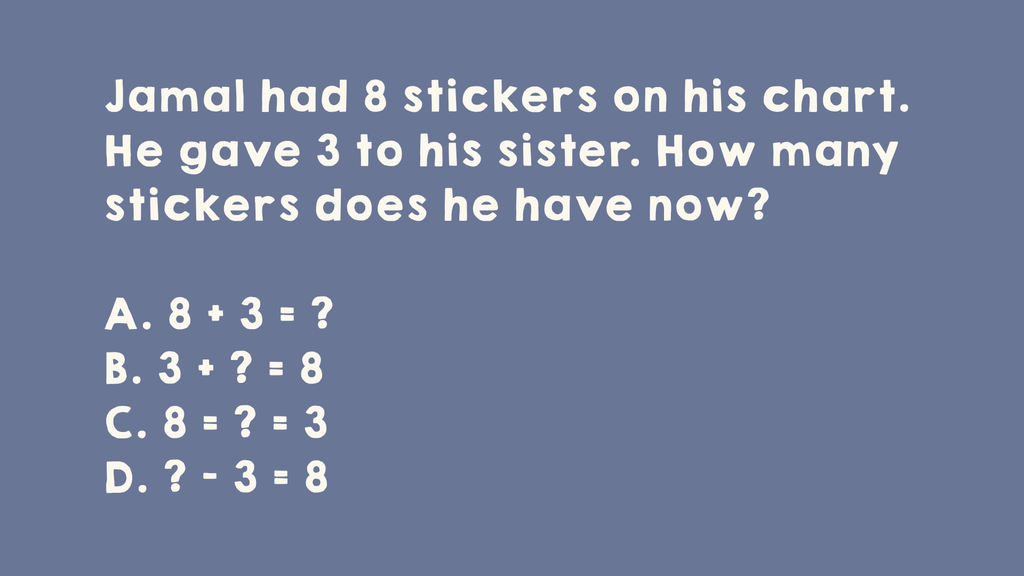
The math main idea describes a total being decomposed into parts, so Parts Equal Total (PET) is the structure that matches. The total is 8, the stickers on his chart. One part is the 3 he gave to his sister, and the other part is the stickers he has left, which we don’t know yet.
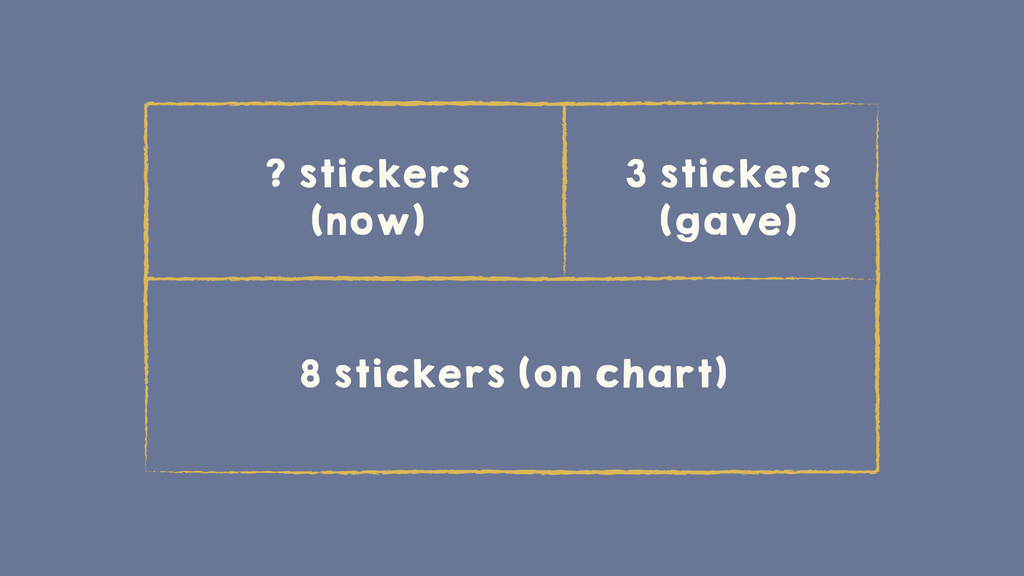
Say you notice a student wrote 8 − 3 = ? as their equation, and then wrote “none of these” next to the choices. A conversation might sound like this.
Teacher: On your structure, where is the 8?
Student: That’s the total.
Teacher: Do any of these equations show 8 as the total?
Student: A adds the 3 to 8, so the 8 isn’t the total. C would make the total 3.
Teacher: That leaves B, 3 + ? = 8, and D, ? − 3 = 8. What are the two parts? What does the total equal?
Student: The parts are the 3 and the stickers he has now. The total is 8.
Then ask them to retell the story, pointing to their structure as they go, and do the same with each equation. When students can retell the story with their structure and then with the equation, they can see how all three connect. In this story, B matches the structure. D starts with an unknown total, and the structure shows the total is 8. Their 8 − 3 = ? and choice B are two different ways to write the same relationship.
Using a Compare Structure to Check Multiple-Choice Answers (Second Grade)
Now let’s look at a second grade math story.
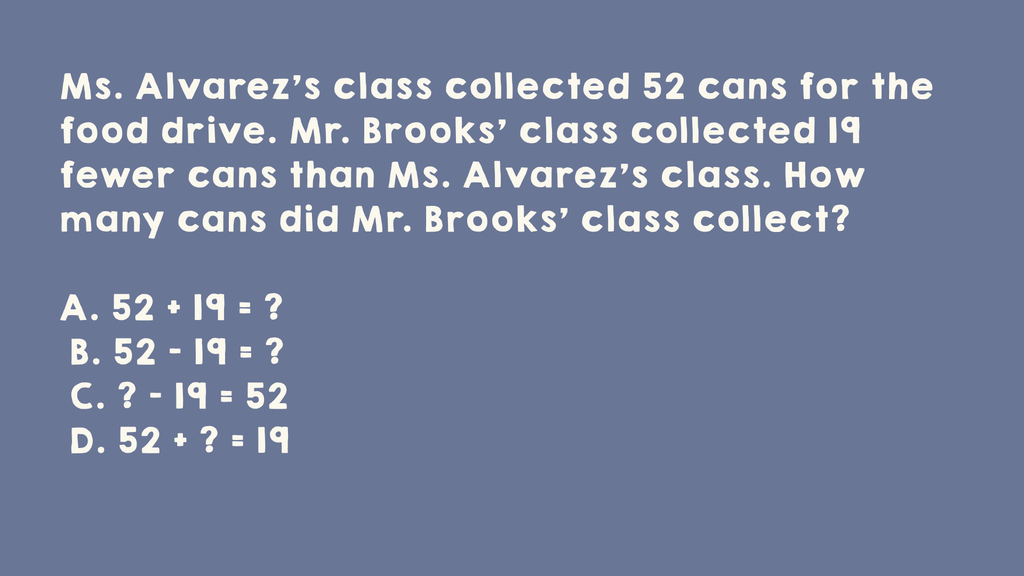
The math main idea describes two amounts being compared, so a Compare structure is the most accurate representation. Mr. Brook’s class collected 19 fewer cans, so we use the shorter bar to represent that value. Ms. Alvarez’s class collected 52 cans, so that’s represented with the longer bar. The 19 is the difference between the two bars, and we don’t know how many cans Mr. Brooks’ class collected yet.
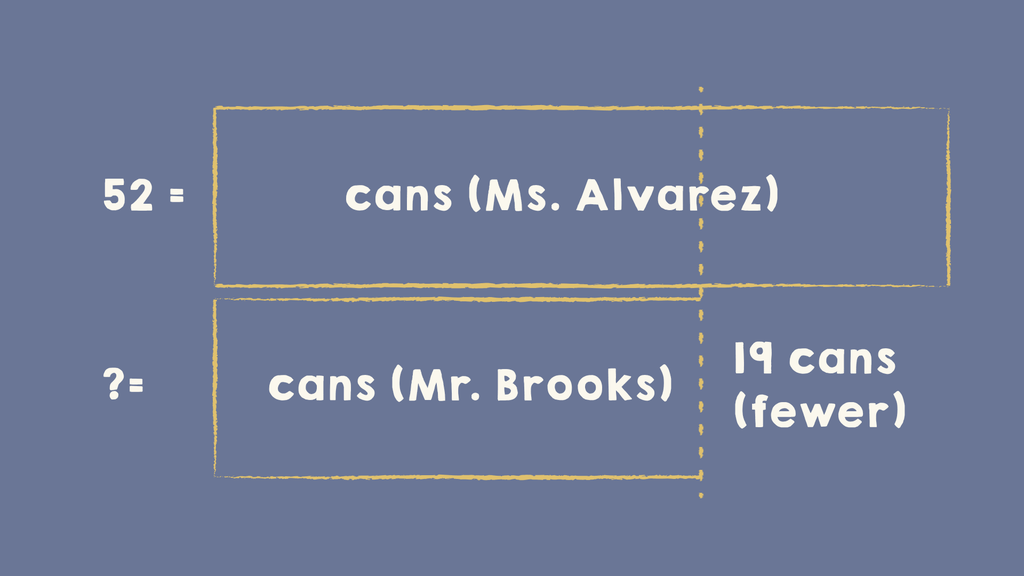
Say a student wrote ? + 19 = 52 and then wrote “none of these” next to the choices. A conversation might sound like this.
Teacher: On your structure, which class collected more cans?
Student: Ms. Alvarez’s class. That’s the longer bar.
Teacher: Do any of these equations show 52 as the longer bar?
Student: A has 52 plus 19. That would give Mr. Brooks’ class more, and the story says his class collected fewer cans. D has 52 plus something equals 19, and 19 is smaller than 52, so that can’t be right.
Teacher: That leaves B and C. Tell me the story using your structure, then tell me if B says the same thing.
Student: Ms. Alvarez’s class collected 52. Mr. Brooks’ class collected 19 fewer, so I take 19 away from 52. B says that.
(This is also a good opportunity to restate this idea more accurately: Yes, this equation demonstrates decomposing 52 into the 19 fewer that Mr. Brooks class has to help us find the total cans his class collected.)
Teacher: What about C?
Student: C says something minus 19 is 52. That would make Mr. Brooks’ class the one with more cans, and our story says fewer.
Teacher: How is B like the equation you wrote?
Student: They’re the same story. B is written a different way.
Teacher: Yes, both equations represent the story. The one using addition represents Mr. Books by using a missing part. The subtraction equation represents the same value as the missing answer.
Using a Repeated Equal Groups Structure to Check Multiple-Choice Answers (Third Grade)
Now let’s look at a third grade math story.
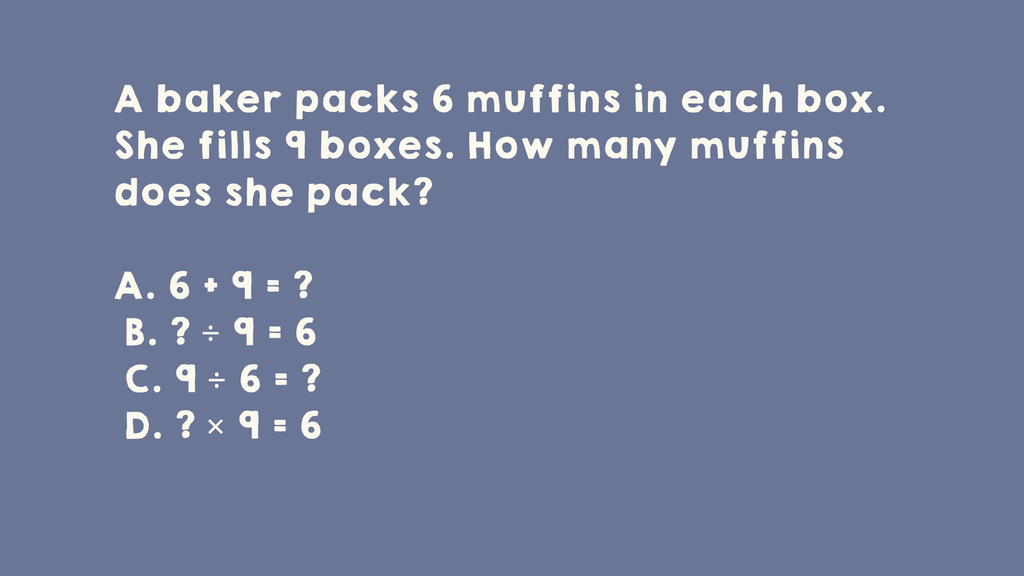
The math main idea describes composing equal groups to form a total, so Repeated Equal Groups (REG) is the structure we would use to represent this story. Each box holds 6 muffins, there are 9 boxes, and the total number of muffins is the unknown value.
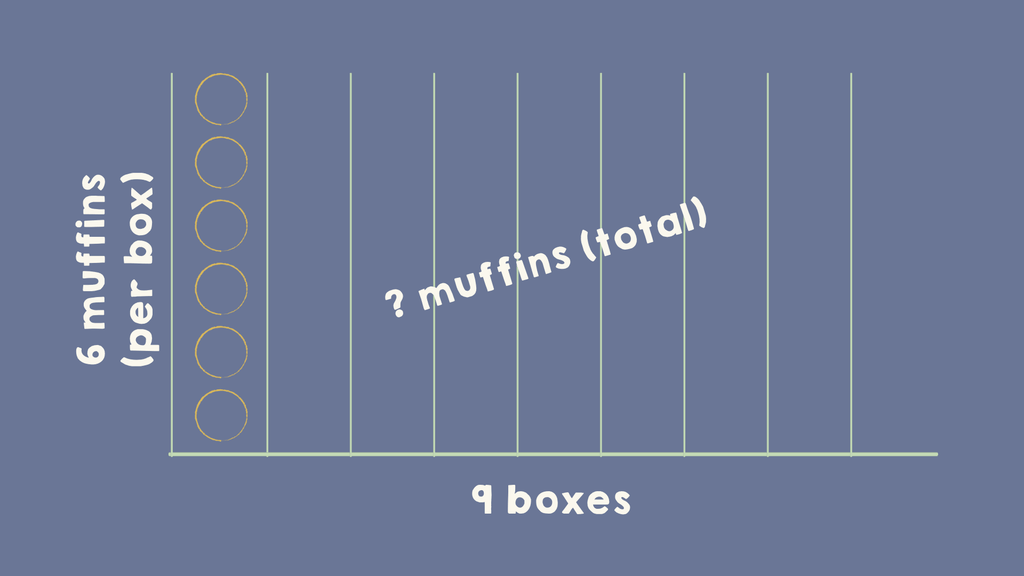
Say a student solved this with 9 × 6 = ? and then wrote “none of these” next to the choices. A conversation might sound like this.
Teacher: On your structure, which number tells you how many muffins are in each box?
Student: The 6. There are 9 boxes, and the total is the question mark.
Teacher: Are there any equations you can cross out?
Student: A adds 6 and 9, but the boxes are equal groups. C is 9 divided by 6, and that makes 9 the total. The 9 is how many boxes there are.
Teacher: That leaves B and D. Tell me the story using your structure, then tell me if B represents the same idea..
Student: The baker put 6 muffins in each of 9 boxes, and we don’t know how many muffins in all. B says the total divided into 9 boxes is 6 in each box. This equation and the one I wrote can both be used to represent the story.
Teacher: What about D?
Student: D says something times 9 is 6. That makes 6 the total, but 6 is how many are in each box.
Their 9 × 6 = ? and choice B both match the structure, which matches what’s happening in the story.
Build It Into the Year Before Test Season
This works best as a routine all year. When a multiple-choice question comes up in an exit ticket, a center, or a quick check, ask students which choice matches their structure and why the others don’t. A few minutes at a time is enough.
In my book I write that readiness comes from comprehension and effective teaching practices, not more exposure to test questions. Students who have practiced this all year don’t need a new strategy the week of the test because they already know what to do.
When students can explain why a choice matches their structure, they understand the story behind the answer. If you want more ways to build that into your instruction, my book walks through all three structures, the math main idea, and how to bring them into your daily lessons. Get the book here.
